Have you ever watched someone you care about going through a really hard time — and felt completely helpless? Perhaps it's a partner dealing with depression, a child who is anxious, a close friend whose marriage is falling apart, or an aging parent whose health is declining. You want to help. You may have tried to help. But nothing seems to make a real difference. And the helplessness you feel may be as painful, in its own way, as what they are going through.
The Particular Pain of Watching
There is a specific kind of suffering that comes from loving someone who is struggling. It isn't just concern for them, though that is real and deep. It is also the frustration of not being able to fix it, the guilt of wondering whether you could be doing more, the exhaustion of being emotionally available day after day, and sometimes the loneliness of carrying this worry largely alone.
Teachers know this feeling well. A student who comes to school hungry, frightened, or visibly unhappy may stay in a teacher's mind long after the school day ends.
Why It Hurts So Much
As I've previously described, we all carry reservoirs of feelings in our minds — reservoirs of sadness, anxiety, guilt, and other emotions that originated and enlarged as we grew and developed. One of these reservoirs contains feelings of helplessness. As young children, there were many times that we felt helpless in the face of difficult situations that we couldn't control. When that feeling of helplessness was overwhelming, a portion of it was split off, not entering our awareness but instead going into a reservoir of helplessness that was out of our awareness.
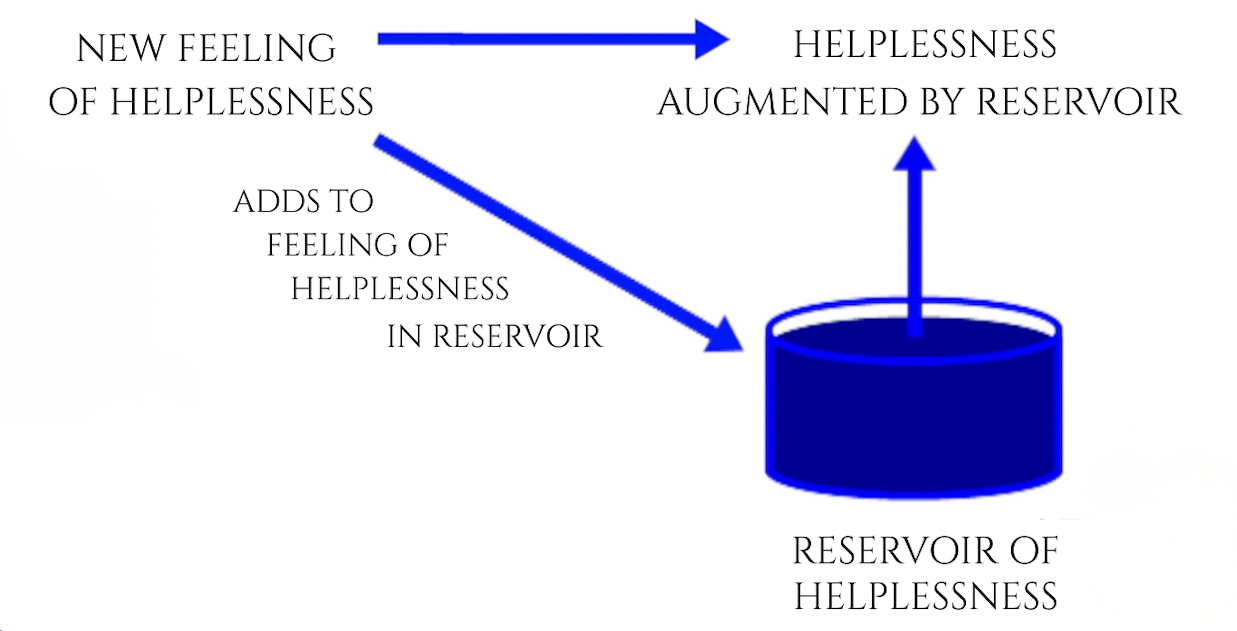
Now, as adults, when we feel distress of helplessness, it evokes a contribution from the reservoir of helplessness, augmenting our current feeling.
What might otherwise be a manageable concern becomes an overwhelming feeling of helplessness. And the anxiety, sadness, and sometimes guilt that we also feel will be augmented by those reservoirs. This is why caring for a struggling loved one can sometimes feel like it is consuming you.
What Doesn't Help
Some people respond to this feeling of helplessness by doing more — offering more advice, researching more solutions, checking in more frequently. Sometimes this helps. Often it doesn't, because without your meaning to, you can make the struggling person feel more pressured than supported.
Others respond by withdrawing emotionally, because the pain of watching becomes too much to bear. This protects them temporarily but leaves them with guilt and leaves their loved one feeling unseen.
What Actually Helps
One important thing you can do for someone who is struggling is to remain genuinely present. But to do that sustainably, you need to take care of your own emotional state first.
Creating a new mental pathway — one that gradually diminishes and eventually eliminates your own reservoirs — makes it possible to be there for others without being consumed by it. I can show you how.
Visit: https://www.communityforwellbeing.com/the-stress-free-formula